
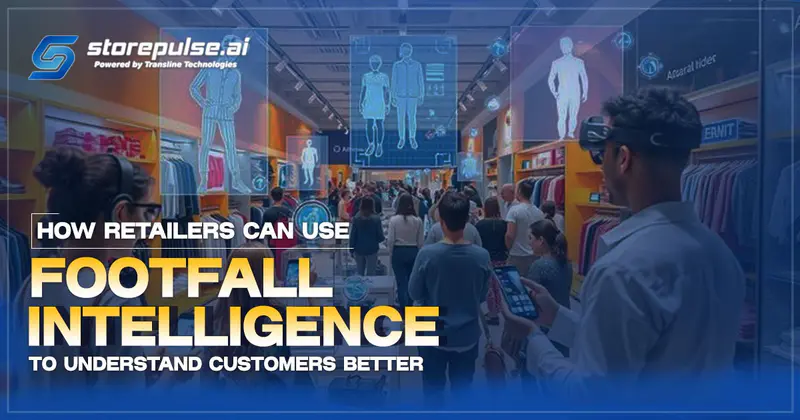
In the rapidly evolving retail landscape, understanding customer behavior is paramount for sustained success. To achieve this, retailers are increasingly turning to advanced analytical tools that can translate raw in-store activity into actionable insights, thereby optimizing operational strategies and refining the customer journey. One such critical tool is retail footfall analytics, which provides an intricate view of how customers interact with physical retail spaces, moving beyond mere transaction data to capture the nuances of in-store engagement. This deeper understanding allows for more effective marketing strategies, personalized offerings, and ultimately, increased customer satisfaction and sales conversion.
What Is Retail Footfall Analytics and Why It Matters
Retail footfall analytics, also referred to as customer footfall analysis, is the process of measuring and analyzing customer traffic, movement patterns, and behaviors within physical retail spaces, most of the time using artificial intelligence. Retail footfall analytics not only comprises the traditional counting of people entering a retail store but also focuses on how much time they spend, what they like, and how they respond to changes in layout or product lines. This data can be used by a retailer to understand their customers better, and they can experiment by seeing which layout attracts more customers and which day is best for which product.
Retail customer footfall analytics also helps one identify hot zone areas which are places where most customers spend their time and this can be significant in understanding what they want more, ultimately boosting sales. Moreover, one can also analyze the null zones which are areas with the least customer footfall and work on improving them. AI retail software can enhance this by using AI.
How a Footfall Tracking System Works
Many retail stores use a footfall tracking system for analyzing their customers. AI driven CCTV cameras capture their entry, exit, and movement in the store. All this data is analyzed by a smart artificial intelligence tool. These tools reflect the insights on a dashboard. This dashboard comprises footfall analytics on a weekly, daily, and mostly yearly basis. This helps retailers get a clear idea of the traffic flow within their retail outlet.
People Counting Analytics Explained
People counting analytics, a core component of retail footfall analytics and customer footfall analysis, leverages advanced AI cameras to deliver precise measurements of in-store customer traffic. Customer footfall tracking is more than counting the number of people entering the store. It comprises AI technology integrated with CCTV cameras, real time calculations, and crowd detection for identifying high density zones. For example, people countinganalytics uses AI cameras to identify the number of people in a particular area. These AI cameras help track entries and exits inside retail shops, and this data can later be used to detect crowd formation, prevent bottlenecks, and improve safety.
Why Accurate Footfall Matters for Retail
Accurate retail footfall analytics is important because it turns people movement data into useful insights that help retailers take smarter decisions. For demand forecasting, retailers depend on accurate footfall patterns to understand how many customers are likely to visit on different days and at different times. This helps them plan inventory better, avoid overstocking, and make sure popular products are always available. When footfall data from AI cameras and real time occupancy numbers are combined, retailers get a much clearer picture of future trends.
For staff planning, detailed footfall insights show peak hours, high density zones, and how long customers stay in different sections of the store. This helps managers schedule staff properly so that customer service is smooth during busy hours and operational costs are controlled during slow periods. For conversion measurement, footfall data helps retailers compare how many people visited versus how many actually purchased. This shows whether store layouts, product placements, or promotions are working well. Accurate footfall insights highlight where customers drop off and where improvements can increase conversions.
Dwell Time Analysis: The Hidden Insights Retailers Miss
Retailers who utilise retail footfall analytics often rely on dwell time analysis to understand how long customers spend in a specific aisle, zone, or area of the store. This gives them a comprehensive view of what attracts shoppers the most, which products are in high demand, and which store layouts drive greater efficiency. These insights are among the most powerful tools in modern retail, helping brands optimise product placement, improve customer experience, and ultimately increase conversions. When combined with real-time footfall analytics, dwell time analysis becomes even more actionable, turning everyday customer movement into strategic retail intelligence.
Identifying Hot Zones and Cold Zones
Dwell time analytics help retailers identify which zones are “hot”, frequently visited and high in demand, and which areas remain “cold” with minimal customer engagement. By combining dwell time analysis with retail footfall analytics, retailers can clearly see where customer interest peaks, allowing them to optimise store layout, boost visibility of key products, and enhance overall store performance.
Optimizing Product Placement with Heatmaps
Dwell time analytics help retailers understand which zones have a higher time-spent rate, revealing where customers naturally pause, browse, and engage the most. When combined with customer behaviour analytics, especially those generated through heatmaps, retailers and store managers gain a comprehensive understanding of how different sections of the store perform. These insights allow retailers to place products more strategically, optimise store layouts, and determine which arrangement works best after cycles of testing and refinement. By leveraging dwell time analysis and retail footfall analytics, stores can continuously improve customer flow, boost engagement, and enhance overall shopping efficiency.
Customer Behaviour Analytics for Better Decision-Making
Customer behaviour analytics gives retailers a much clearer understanding of how shoppers actually move, engage, and make decisions inside the store right from entry to exit. With customer behaviour analytics, brands can track real-time interests, spot product demand patterns, understand who’s just browsing versus who’s ready to buy, and see which zones actually push conversions. It also helps refine category placements and create more personalised promotions that align with customer behaviour analytics and what customers genuinely respond to. Instead of relying on assumptions, retailers get sharp, actionable insights based on real shopper behaviour, helping them take smarter decisions that improve store performance, customer experience, and overall ROI.
Understanding the Customer Journey
Customer journey mapping powered by footfall intelligence reveals exactly how customers enter the store, which paths they naturally take, where they pause to explore, where they lose interest or disengage, what factors influence their purchase decisions, and what causes them to drop off before buying. By understanding these patterns at a deeper level, retailers can redesign the entire in-store experience to make it smoother, faster, and more meaningful, ultimately guiding customers more effectively and improving overall conversion.
Improving Store Layout & Experience with Data
Improving store layout and overall experience becomes much easier when decisions are backed by data. When retailers use insights from customer behaviour analytics, they can improve navigation, reduce clutter, guide customers toward high-priority sections, increase the time shoppers spend in profitable areas, and even create more opportunities for impulse purchases. Every layout change has a purpose and a measurable outcome because it is rooted in real customer behaviour rather than guesswork.

Real Business Impact: From Better Experiences to Higher ROI
Footfall intelligence also creates a real business impact that shows up directly in performance metrics. Retailers experience higher conversions, better staff productivity, faster inventory movement, more efficient store operations, enhanced customer satisfaction, and improved revenue predictability. When retailers truly understand how their customers move, behave, and make decisions inside the store, profitability naturally follows.
These insights are especially powerful for improving conversions because footfall intelligence reveals the exact moments where retailers lose or gain customers. It highlights which products attract attention, which aisles customers skip, where queues form, where people drop off due to poor visibility, and which promotions actually perform well. Fixing even one weak touchpoint can dramatically increase conversions and create a smoother shopping experience.
Why AI-powered Footfall Intelligence Is the Future
AI-powered footfall intelligence is the future of retail because it brings precision, automation, and predictability into everyday operations. Through predictive analytics, AI can forecast future footfall, seasonal trends, buying patterns, product demand, and staffing needs, helping retailers plan ahead rather than react at the last minute. Retail footfall analytics also improves operational efficiency by reducing manual work, automating data collection, and providing real-time insights that allow retailers to make faster, more confident decisions.
StorePulse AI powered by Transline Technologies strengthens this even further by delivering complete people and activity intelligence for modern retail environments. It offers AI-powered footfall tracking, real-time people counting analytics, dwell time analysis, heatmaps for customer behaviour analytics, predictive insights for planning, entry–exit tracking, hot and cold zone identification, conversion funnel tracking, custom dashboards, and instant alerts with automated reporting. With StorePulse, retailers don’t just see what’s happening in their store, they understand why it’s happening and what steps they should take next.
If you're ready to transform your retail store, data-driven intelligence is the way forward. With tools like StorePulse AI, you can boost conversions, optimise store layouts, understand your customers at a deeper level, and make smarter decisions powered by real-time footfall insights. Book a free StorePulse demo today and experience the future of retail analytics.